
The Automats were here back in 1912:
automat, n. | Gr. automatos, self-acting |
1. an apparatus for serving foods mechanically when a coin is dropped in a slot. 2. a restaurant having such apparatus in place
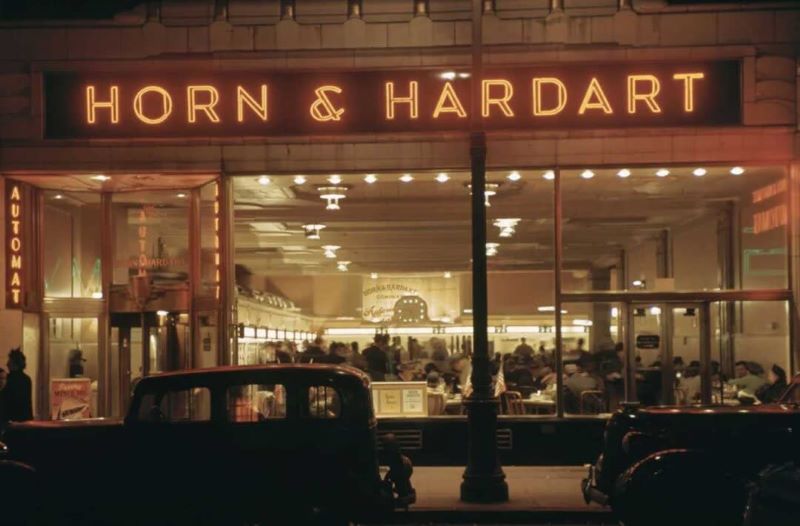
The pictures (above) show the original Horn & Hardart Automat in NYC.
A limited number of genuine Automat machines are salvaged and available for sale from the Automat Collection of Steve Stollman.
Please join Steve Stollman at Meet Me at the Automat event
Monday 07/02/2012, 1 P.M., 1557 Broadway in Times Square
Decorate your new Automat restaurant with unique and genuine Automat items. We have many original Automat units from Horn and Hardart Automat, some chairs, glasses, plates, etc. For more antiques, please visit abeautifulbar.com
Press Release:
Who: Steve Stollman MeetMe@TheAutomat.com 212 431 0600
What: Celebration of the 100th Anniversary of the opening of the first Horn and Hardart Automat in New York City
Where: In front of 1557 Broadway, the site of the first Automat
When: From 1 PM to 3 PM, Monday, July 2, 2012
On July 2nd, 1912, at 1557 Broadway in Times Square, the first of New York City’s remarkable chain of low-priced but high-quality restaurants opened. For nearly a century, the 40 Horn and Hardart Automats scattered around NYC became some of the most well-known and well-loved elements of this place, extremely popular among tourists and residents alike. It is worth reflecting on its unique character and its influence on many aspects of our lives.
Steve Stollman, who for twenty years has been the only source and conservator of the last of these handsome and unique vending machines that once were the primary symbol of this phenomenon, will provide information to those members of the press interested in giving the public a better picture of this New York City icon. He will provide copies of the book “The Automat” by Lorraine Diehl and Marianne Hardart, the best book available on this subject, to help them understand this issue better.
Some may wish to visit the recently-opened show at the New York Public Library on the history of lunch in NYC, a few blocks away on 42nd Street and 5th Avenue. The restored Automat fixtures on display there are strong evidence of the beauty and charm of these restaurants as well as the ability of some businesses and institutions to serve the real needs of the entire population, regardless of social station, with class and distinction. The library itself, as well as the Automat, is an excellent example of the important benefits that accrue to a society when its gifts can be made available to all rather than just a few.
Said the Technocrat, to the Plutocrat To the Autocrat, and the Democrat — “Let’s all go eat at the Automat!”
Articles:
If you grew up in the ’60s or ’70s, you’ll remember these 5 lost chain restaurants
Story by Debi Murray
A new collection of H&H articles
By Gene Gerrard Sept. 22, 2025 8:00 pm EST
The Fast-Food Pioneer That Served Millions But Couldn’t Escape Bankruptcy — Twice
https://www.tastingtable.com/1971129/fast-food-pioneer-bankruptcy-horn-hardart-automat
Vintage Photos From the Golden Age of Automats
by Erin Kuschner, Mon, July 28, 2025 at 3:09 PM GMT+2
Source: https://www.aol.com/vintage-photos-golden-age-automats
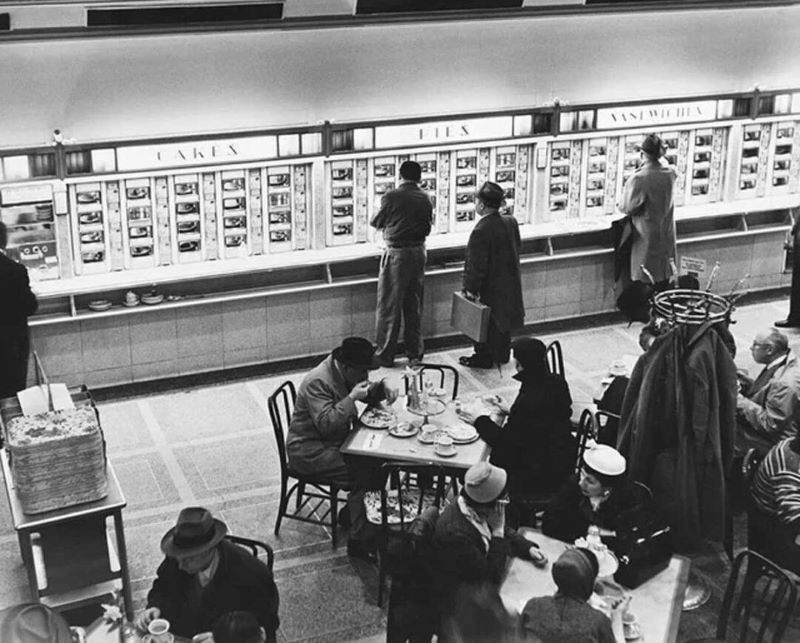
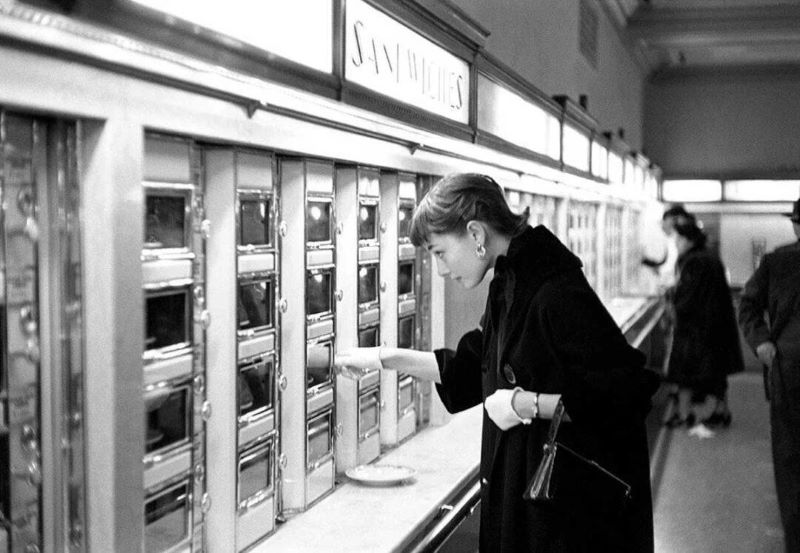
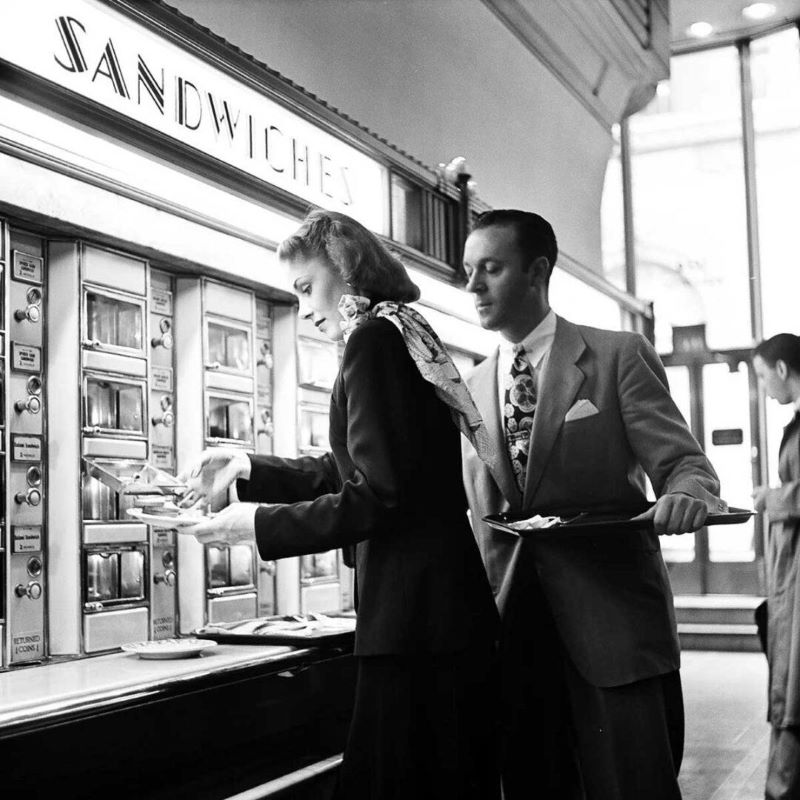
Selected Vintage Photos from the article:
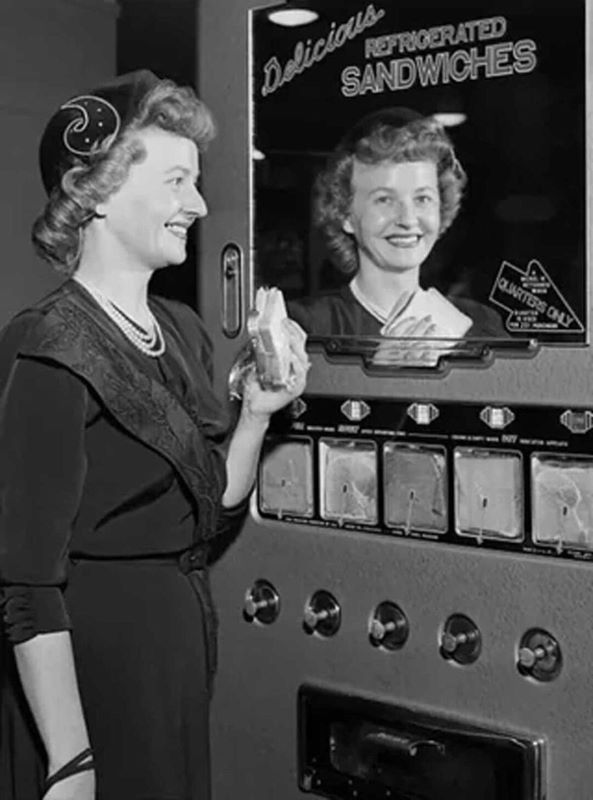
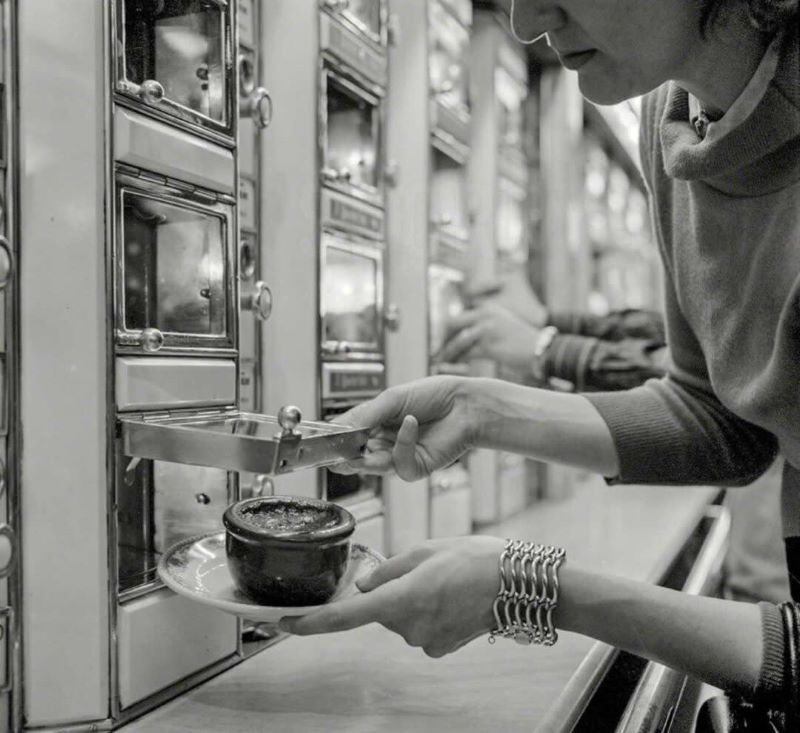
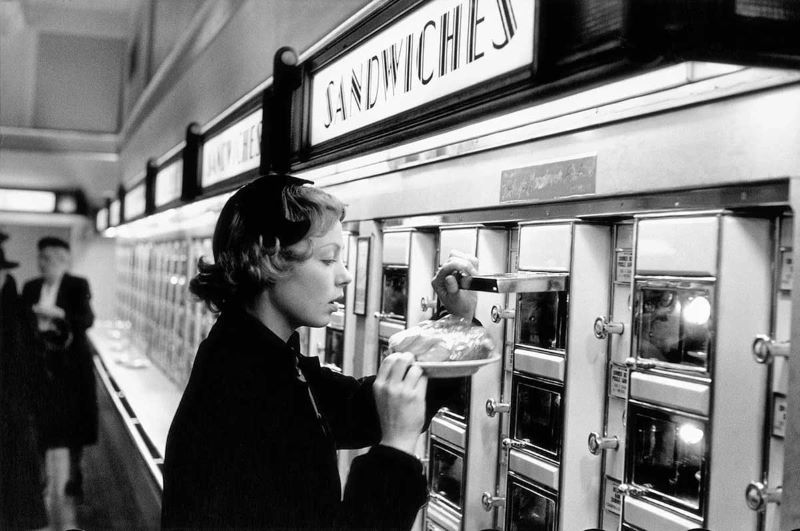
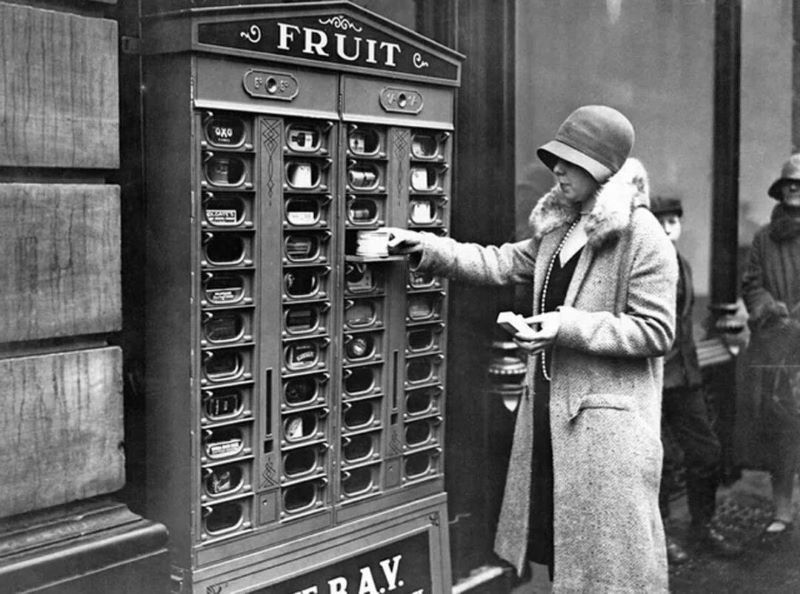
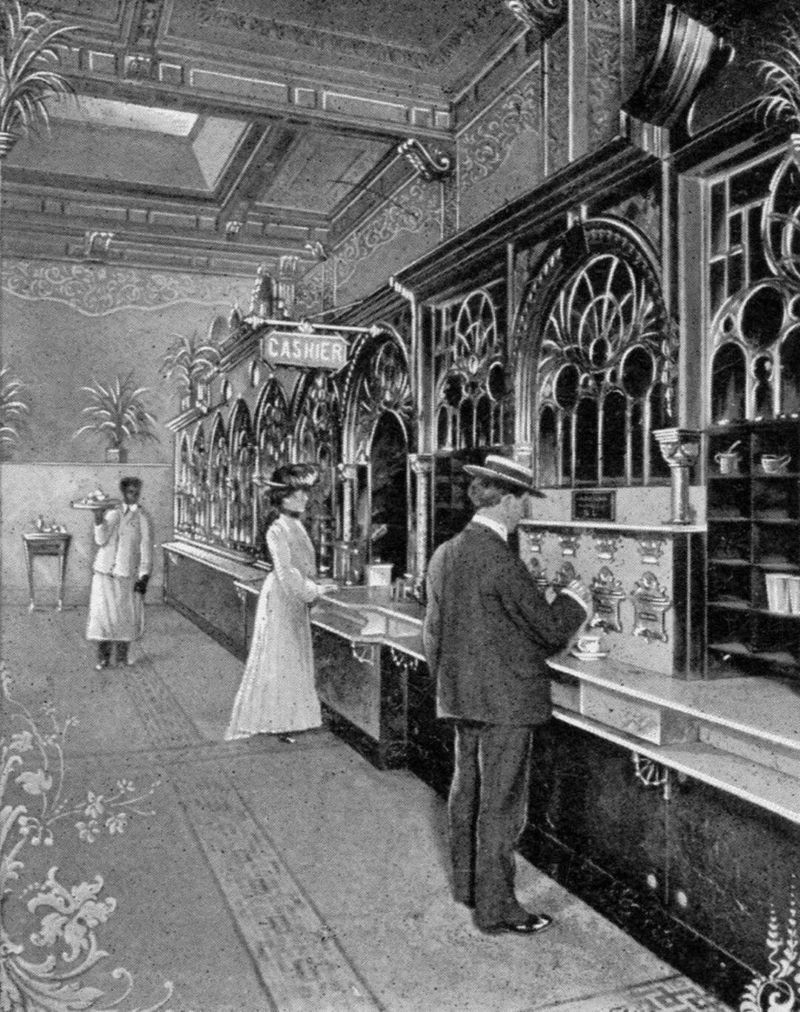
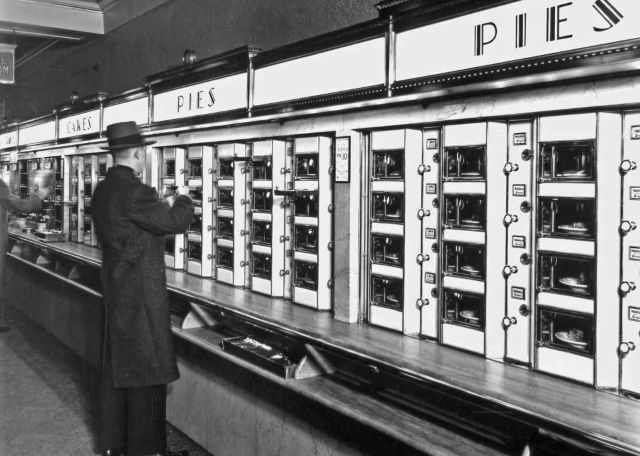
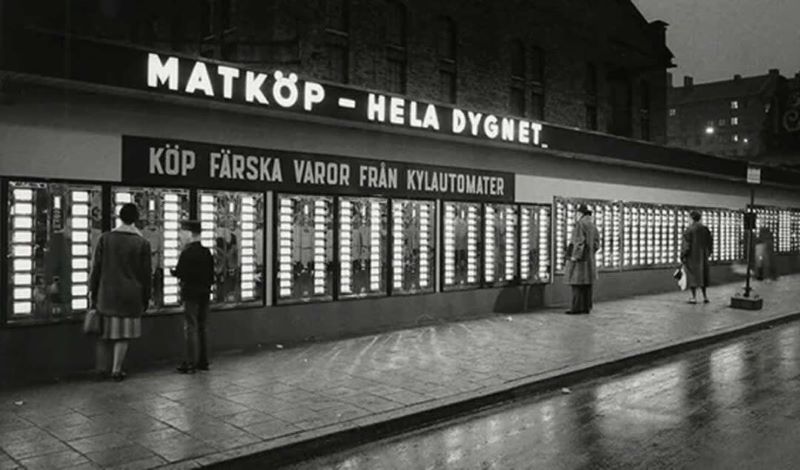
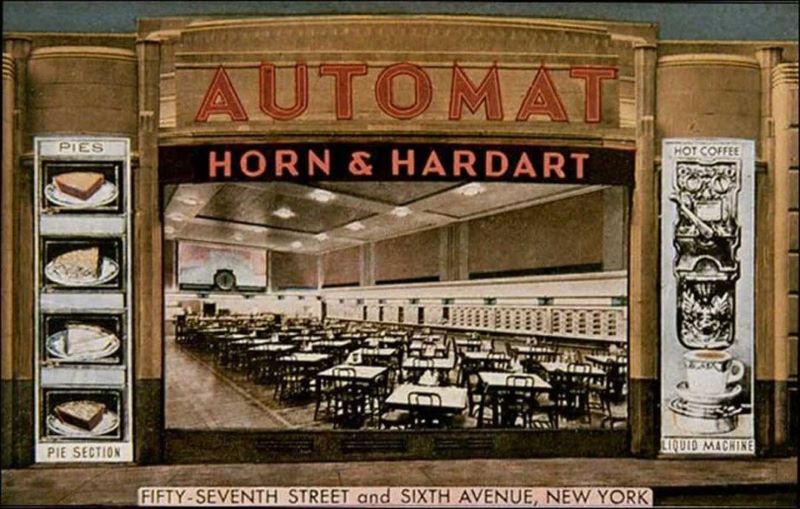
Ben Popkin
How Restaurants Rose to the Cutting Edge of Technology
Last Updated: March 31, 2025
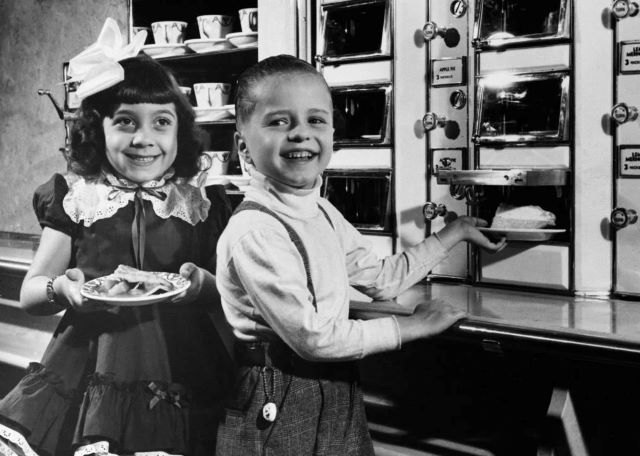
Bettmann // Getty Images
The hyper-competitive restaurant industry is constantly reinventing itself and using technology to stay sharp. From modern architecture and signage to innovations in serving and embracing the latest digital innovations, dining establishments are always on the hunt to find new ways to draw customers in through gastronomical, technological, and even logistical innovations.
Uniqode compiled industry reports and news articles to explore the most significant technological leaps and developments in the restaurant industry over the past century.
Some ideas have been widely adopted, such as “in-car” dining. Others, like a soda machine hooked up to an early version of the internet, “fizzled out” while still laying the groundwork for future successful developments. Others are just getting started, like artificial intelligence-enabled ordering systems.
Some of the latest innovations were in response to or were accelerated by the needs of the COVID-19 pandemic, and have still stuck around. QR code menus and touch-screen ordering seem here to stay because the reduced overhead and increased order accuracy and efficiency are just too great. Still, polls show the power of human interaction, service, and atmosphere are important to guests. Mastering technology without fully automating the dining experience and maintaining the human touch is another kind of ongoing innovation the industry must address as it moves forward and embraces change. Bon appetit!
NEW YORKER, The Automat Is a Guide to the Wonders of Mid-Twentieth-Century Urbanism
Lisa Hurwitz’s ode to the Horn & Hardart restaurants—featuring Mel Brooks, Elliott Gould, and Ruth Bader Ginsburg—depicts cheap dining as a theatrical experience.
When Hurwitz questions the architectural dealer Steve Stollman (who collects the chain’s furnishings) about the “idealism” of Horn & Hardart, Stollman responds, “I think the idealism was infused into the lives of the people who experienced the Automat.” I think he’s right—and that, like any ideal, like any original idea, its inspirational power is out of control.
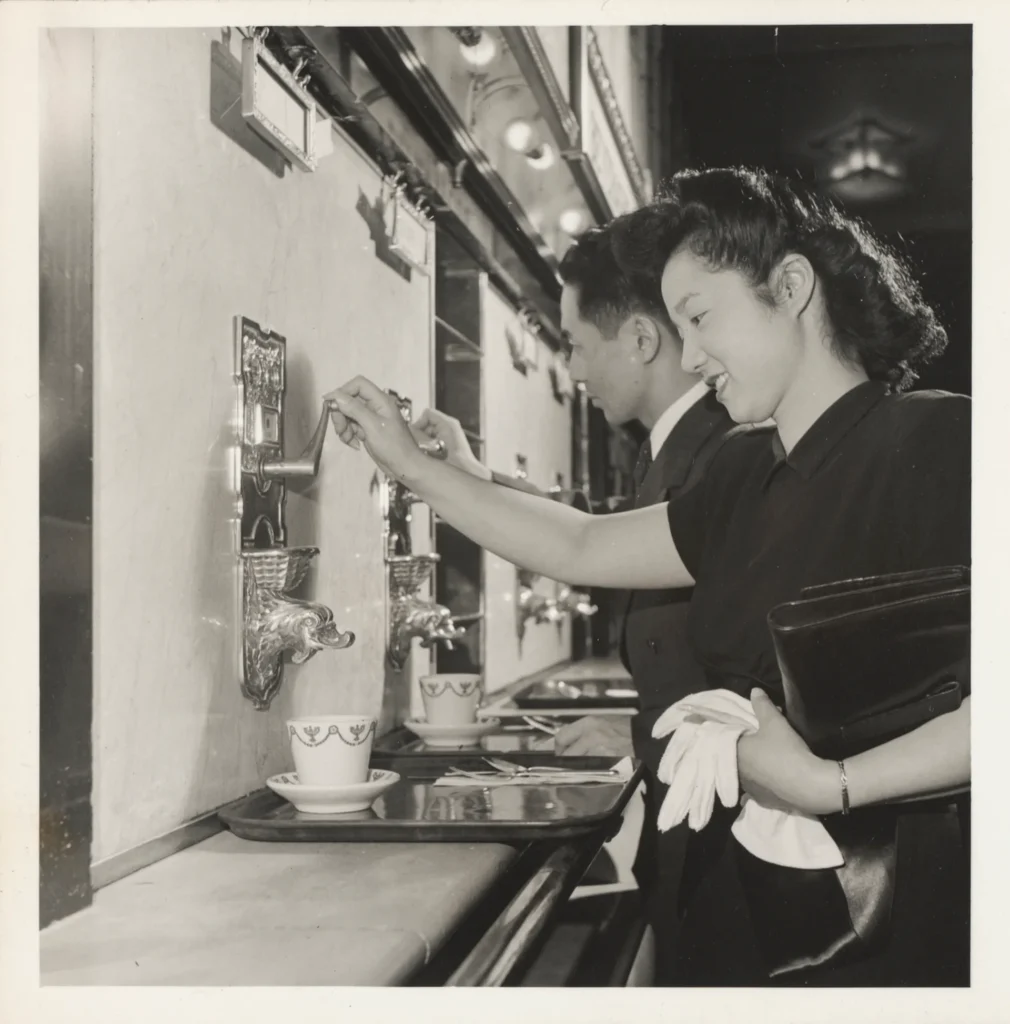
The high style of movies such as “The French Dispatch,” “Zola,” and “Strawberry Mansion” is more than a matter of décor; their performances are stylized because style is as much a way of life as it is a visual delight. In Lisa Hurwitz’s new documentary, “The Automat,” which opens today at Film Forum, the equation is surprisingly reversed: it spotlights the enduring power of everyday, street-level style. The subject is a piece of New York (and Philadelphia) nostalgia: the once ubiquitous self-service Horn & Hardart restaurants that, as Hurwitz’s film makes clear, were as noteworthy for their décor and their social life as for their inexpensive but tasty food. (I speak from a personal childhood memory.) The film, which uses a conventional round of interviews with people whose lives intersected with the restaurants and a tangy selection of historical documents and archival footage, shows that the style in question was more than a matter of marketing; it was, as in the work of artists, the embodiment of an idea—even of an ideal.
Hurwitz’s prime guide into the elusive wonders of mid-twentieth-century urbanism is none other than Mel Brooks, born in 1926, who grew up in Williamsburg and went with his brothers to Manhattan (which, he emphasizes, they all called New York, as did my Brooklynite ancestors) to eat, cheaply but well, at a Horn & Hardart Automat. Discussing a brief article by Brooks nearly a decade ago, I exhorted him to write a memoir, because his power of memory, with its profusion of vivid details, is inherently literary, and his recollections in “The Automat” make him no mere tour guide along memory lane but a veritable Virgil from a vanished world of ordinary graces. (I took particular pleasure in his mention of the booth where a clerk changed dollar bills into nickels, through a cutout in a window, passing the coins through a counter where “the wood was very smooth” from constant use.)
The delight of “The Automat,” which also features twenty-one other interview subjects from many walks of life and connections to the restaurant chain, is its blend of social and intellectual history with its anecdotal history—its evocation of the links between intention, practice, and experience; its depiction of a largely lost aesthetic of daily life. Hurwitz sketches the restaurant’s nineteenth-century roots: the desire of the Philadelphia-born Joseph Horn to open his restaurant, and the dream of a German immigrant in New Orleans named Frank Hardart to export that city’s style of coffee. Inspired by mechanized German self-service restaurants, they opened their first Automat in Philadelphia in 1902, and their first in New York ten years later. They soon opened more, in both cities: Horn stayed in Philadelphia and ran the restaurants there; Hardart (and, after his death, his sons) ran the ones in New York. The film links the rapid expansion and success of both chains to the two cities’ economic boom (a growing workforce meant more people eating meals away from home and near offices) and to the rise of immigrant populations, who could eat in self-service restaurants without having to order in English.
Revisiting the Era of Automatic Dining
cityroom.blogs.nytimes.com/revisiting-the-era-of-automatic-dining
Fresh from the press cityroom.blogs.nytimes.com/stories-from-the-automat-machines-in-a-harlem-basement
Read the full story at nytimes.com/nyregion/new-yorkers-co-in-little-boxes-the-automat-lives-on.html
Remember the Automat theatlanticcities.com/arts-and-lifestyle/2012/06/remember-automat
Vanishing New York vanishingnewyork.blogspot.com/2008/04/steve-stollmans-place.html
http://www.wired.com/science/discoveries/news/2008/06/dayintech_0609
https://www.eater.com/2015/9/16/9334659/automat-eatsa-history-future
http://en.wikipedia.org/wiki/Horn_&_Hardart
http://en.wikipedia.org/wiki/Automat
Automats: The Utopian Future or a Return to a Dystopian Past?
https://www.eater.com/2015/9/16/9334659/automat-eatsa-history-future
The reincarnation of the automat brings up complex moral questions.
by Joshua David Stein Sep 16, 2015, 3:00pm EDT
Via All Future Week Coverage [E]
https://www.salon.com/2022/02/17/the-automat-films-lisa-hurwitz
https://watch.eventive.org/2022nhjff/play/61fece2b92114e0052114a62
https://blog.cartoonmovement.com/2023/07/our-last-newsletter-before-the-summer-break.html
https://www.nhjewishfilmfestival.com/2022-automat
Dictionaries:
https://www.merriam-webster.com/dictionary/Automat
http://www.thefreedictionary.com/Automat